A provision of the Freedom to Vote Act reduces credibility, defying common sense

There is a lot that needs to be improved in our elections. The current bill before Senate and House, the Freedom to Vote Act, is well intended yet in at least one provision it actually makes elections less secure, less likely to provide public confidence. This is a change from previous bills H.R.1 and all version of S.1.

This new provision would prevent observers from within eight feet of ballots until after certification. That would make it impossible for observers to actually see that votes were counted and totaled accurately in audits and recounts (recanvasses in CT).

From page 298:

‘‘(1) I N GENERAL.—A person who is serving as a poll observer with respect to an election for Federal office may not come within 8 feet of
‘‘(A) a voter or ballot at a polling location
during any period of voting (including any period of early voting) in such election; or
‘‘(B) a ballot at any time during which the processing, scanning, tabulating, canvassing, or certifying voting results is occurring.

Like other provisions it is well intended but has unintended consequences. Observers need to be closer to observe ballots being adjudicated, votes determined and counted. Without public verifiability, justified confidence in elections is not possible.  We have covered the details of this before in our editorial series: Common Sense, specifically Justified Confidence and Public Transparency and Verifiability.

January 6 was practice. They are much better positioned to subvert the next election.

Bart Gellman article in the Atlantic: Trump’s Next Coup Has Already Begun
January 6 was practice. Donald Trump’s GOP is much better positioned to subvert the next election 

Its a long article, yet, unfortunately the most chilling projection yet of what is awaiting in 2024 and perhaps in 2022. I would emphasize Trump less that Gellman.  It can be as bad if he is not the candidate. Its not just the presidency at stake, its all levels of democracy and our democracy itself.

Bart Gellman article in the Atlantic: Trump’s Next Coup Has Already Begun
January 6 was practice. Donald Trump’s GOP is much better positioned to subvert the next election <read>

Its a long article, yet, unfortunately the most chilling projection yet of what is awaiting in 2024 and perhaps in 2022. I would emphasize Trump less that Gellman. It can be as bad if he is not the candidate. Its not just the presidency at stake, its all levels of democracy and our democracy itself.

In 2022 much of the same playbook could be used to change a handful or less House districts, or a couple of Senate seats and suddenly the House and Senate change to the control of the Republican Party, thwarting the President’s agenda and further harming voting rights and integrity.  Fine if the Republicans win one or both houses legitimately, by not illegitimately.  In 2024 even more is at stake, even more erosion can be anticipated if nothing changes the current trajectory.

Its unlikely to happen in Connecticut, with our current voting laws and little chance for them to change, yet even in 2021 we have seen several baseless claims by losers (and a couple legitimate claims which will likely be appropriately investigated).

Read and understand. Consider what you might do to support appropriate laws, serve in polling places, and perhaps open some minds.


Connecticut RLA Working Group, 2nd Meeting

On Wednesday, the CT RLA (Risk Limiting Audit) Working Group held its second meeting and firmed up plans for the 2021 prototype audits. Below is a video of the meeting and an email I sent the Chair Gabe Rosenberg and the chief scientist from UConn, Alex Russell.

Watch here:
https://www.youtube.com/channel/UCzakPMlj0LigvokDrkgiDVw/live

I have watched both meetings of the RLA Working Group and have several Suggestions and comments…

On Wednesday, the CT RLA (Risk Limiting Audit) Working Group held its second meeting and firmed up plans for the 2021 prototype audits. Below is a video of the meeting and an email I sent the Chair Gabe Rosenburg and the chief scientist from UConn, Alex Russell.

Watch here:
https://www.youtube.com/channel/UCzakPMlj0LigvokDrkgiDVw/live

****************************************************

Gabe, Alex,

I have watched both meetings of the RLA Working Group and have several Suggestions and comments.

As you may or may not know, I have been involved in post-election audits and audit laws in CT and nationally since 2007. Since 2009 I have been involved in what become known as RLAs. I was a catalyst in causing a meeting in early 2010 in D.C. and in securing invitations to three officials from CT who attended. After that meeting, they took the lead in initiating what became the UConn Audit Station. I was involved in the planning of the Colorado RLAs and planning, executing, and reporting on the Rhode Island RLA pilot. I was an observer at the Fairfax City RLA demonstration, which I used as a basis to suggest improvements for the RI pilot.

  • I complement all involved on the successful development of the UConn Audit Station. And the significant improvements in it in the last couple of years. It can save CT hundreds of thousands in an RLA.  Note: That all the experts recommended a Ballot Comparison Audit for RI, yet due to the extreme cost of ES&S central count scanners, the RI Board of Elections chose Batch Comparison Audits.
  • QR codes: The use of QR codes on ballots (mainly on printed ballot marking device ballots) has raised huge integrity and transparency concerns. The concern is that they are not human readable/verifiable for auditing. I would suggest a)the QR code labels also included printed sequence numbers etc. of what is in the QR code and b)the QR code be readable to show that same information by a standard smart phone QR code reader. I would also suggest you assume that QR codes do not need to be scanned in order, to facilitate multiple people/groups putting on stickers and that some stickers will be broken, misapplied, or otherwise discarded in the process.
  • Are you aware of the recent guidance for the U.S. DOJ that all election materials should be preserved for 22 months for Federal Elections. So things like CVRs, images, paper and computer records (Arlo records) must also be preserved?  Since this is not a Federal election the letter does not apply, yet it would be a good practice to do the same for 6 months for other elections as well.
    https://www.justice.gov/opa/press-release/file/1417796/download
  • I would have liked if ABs were included in the prototypes. Also note that there has been no recognition of the need to account for originally hand counted and EDR ballots in an actual RLA.
  • Two Transparency Requests: I hope you will consider giving at least a week’s notice of the date, time and place of any RLA prototypes, such that there is an opportunity for observers to attend. I would also suggest, like RI, live video stream(s) of the RLAs showing the whole space, so that the pubic can in that way observe the whole process and additional streams showing the details of ballot comparisons, ballot security, and data entry into Arlo (or other software).
  • Two Small Comments on the Slides: a) National experts have consistently said that there are three RLA methods, yet they include Batch Comparison Audits and view Full Recounts as a possible final round of all the other types of RLAs. b) I believe it is incorrect to state that “All previous pilots have considered single precincts”. As the person planning and leading the RI Batch Comparison Audit, I can state that it included multiple precincts. I also checked with my colleagues more involved in Colorado and they confirmed that Colorado pilots always included multiple precincts.
  • Going forward, a) I believe that the biggest challenge in conducting an RLA for CT is the town-by-town structure of elections. I would be a strong advocate for the idea of a small number of sites across the state for scanning with the Audit Station, with trained officials responsible for the Audit Station and guiding local officials in the rescanning process. b) Instead of QR stickers, perhaps a device or scanner could be acquired/developed to print QR codes on an appropriate place on ballots – stickering the whole state would be quite an expensive, time-consuming process.

Finally, while I am a supporter of RLAs, they are not a panacea, In my opinion, in many instances they have been oversold as easy and they are all that is necessary to prove that elections are OK. I am not aware of any state laws for RLAs that I or most would  consider good, even as far as they go.  Often they leave it to an official to choose contests to audit, leaving the suspicion that they made political decisions, where also they often choose uninteresting high margin contests to make the RLA easier. Similarly they often require the auditing of one or two contests, which says nothing about other contests. Doing Ballot Comparison RLAs has the advantage that with marginally more work all large contests can be audited (in CT, statewide and Congressional Races are most suited to RLAs).

RLAs are not well suited to municipal contests in CT, as your statistical table shows. RLAs do not provide much insight into errors. So, there is a place for the batch audits now done in CT. There is also a need for eligibility audits – are the checkoffs accurate? Are those checked actually qualified to vote? Are absentee ballots signed correctly, signatures accurately adjudicated? Etc. Especially in CT there is a need for audits of ballot security, which according to the experts are a prerequisite to trusted, useful RLAs.

Perhaps you would share this letter with the entire membership of the Working Group.

Thanks,

Luther Weeks
Executive Director, CTVotersCount and Connecticut Citizen Election Audit
September 2021 Audit Drawing

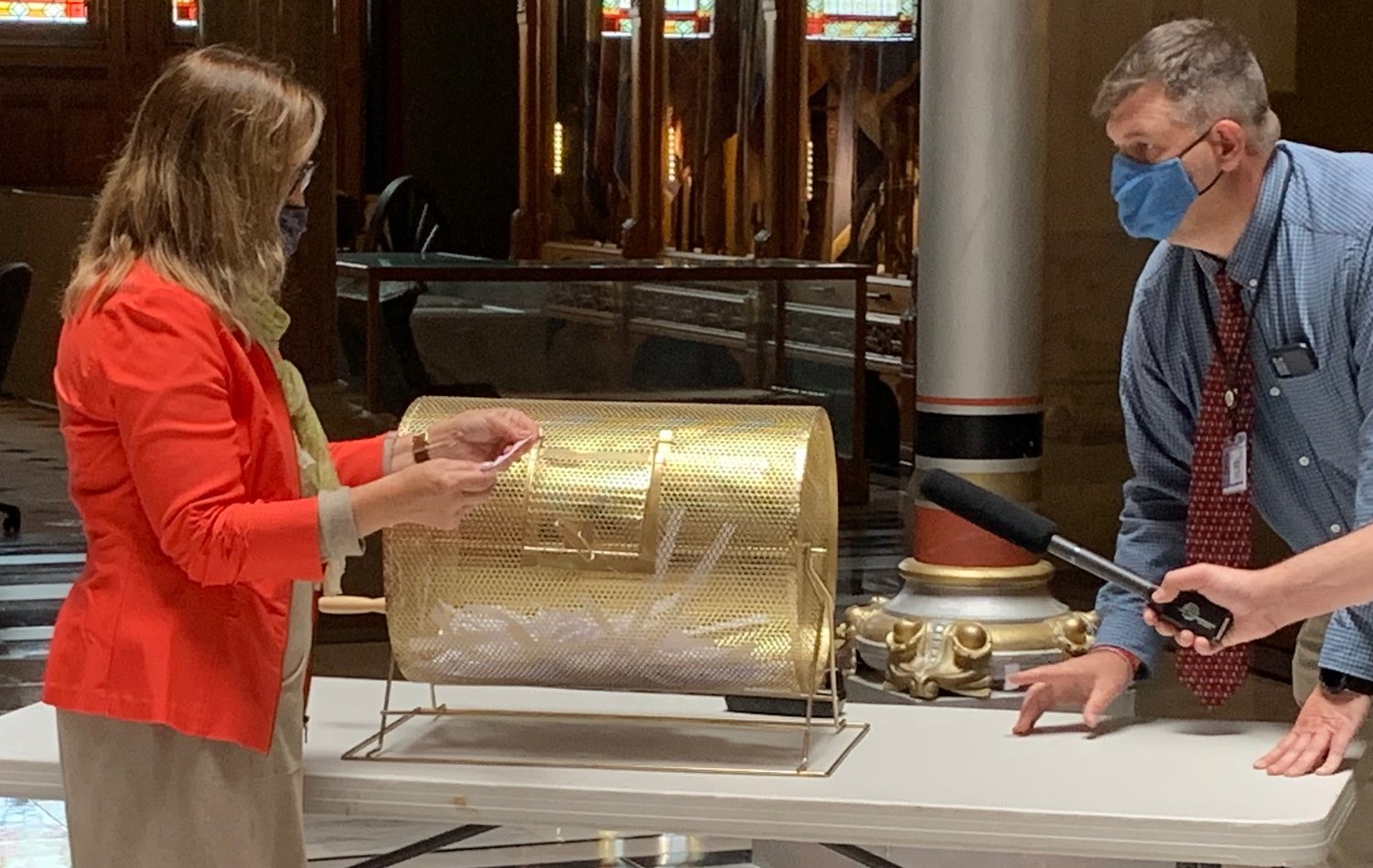
This year’s drawing was different. Based on the law passed this year it finally included centrally counted absentee ballots, an item we have been requesting since 2008. We thank Secretary Merrill for initiating the change this year. Better late than never!

This year’s drawing was different. Based on the law passed this year it finally included centrally counted absentee ballots, an item we have been requesting since 2008. We thank Secretary Merrill for initiating the change this year. Better late than never!

The Arizona “Republican Audit”, no so fast

There are many reviews of the Arizona “Republican Audit” <read> and critiques, like this one <read>. I have to admit that I did not attend or watch the audit and have not read the report in detail, yet I have heard from those who have read the report and some who observed parts of it. Democrats and others are celebrating. Don’t rush to any conclusions, consider:

  • There are many distorted claims in the audit report, yet a few point to weaknesses in our election process, not just in Arizona…

There are many reviews of the Arizona “Republican Audit” <read> and critiques, like this one <read>. I have to admit that I did not attend or watch the audit and have not read the report in detail, yet I have heard from those who have read the report and some who observed parts of it. Democrats and others are celebrating. Don’t rush to any conclusions, consider:

  • There are many distorted claims in the audit report, yet a few point to weaknesses in our election process, not just in Arizona. For instance we need to be concerned with ballot security, largely from when they leave the polling place until they are destroyed 22  months later – how secure is the storage? Who can access the storage and ballots undetected? How can we be sure?
  • There are huge questions about the quality of signature comparison, is it even a reliable way to check for fraud? Does it really serve to inappropriately reject legitimate ballots?
  • Democrats and others celebrate that the audit “proved” that Biden won by a slightly larger margin than the official results.  Given the non-transparency of the audit, there is no reason to believe its results are more accurate that the official results; no reason to believe they are accurate at all. Perhaps Biden won by a little more or a little less than the official results, yet this audit provides no reliable evidence.

RLA Working Group holds its first meeting.

This spring there was a bill to initiate a Risk Limit Auditing Working Group. I testified in favor of the concept and suggested several changes to the bill. A similar bill was passed near the end of the session. Last week the group began its work. Here is a video of the meeting:
https://www.youtube.com/watch?v=UhH4JVYcaso

Here is the bill passed by the General Assembly: https://cga.ct.gov/2021/ACT/PA/PDF/2021PA-00002-R00SB-01202SS1-PA.PDF (The RLA section is on page 156.)

The meeting lasted about an hour, primarily consisting of an introduction to RLAs by Alexander Russell from UConn.  Assisted by Ben Fuller also from UConn.  Also in the group was Brian Macdonald, a statistician from Yale.

I am only familiar with the Chair Gabe Rosenburg, Alex Russel, and one of the registrars of voters in the group. There was no published agenda or list of members. The members were listed by the Chair at the beginning of the meeting. I could be wrong, yet as far as I know none of the members of the group have any experience observing or participating in RLAs. A far cry from RIs plan which included experienced experts from around the country and took much more time and effort that seems to be possible here…

This spring there was a bill to initiate a Risk Limit Auditing Working Group. I testified in favor of the concept and suggested several changes to the bill. A similar bill was passed near the end of the session. Last week the group began its work. Here is a video of the meeting:
https://www.youtube.com/watch?v=UhH4JVYcaso

Here is the bill passed by the General Assembly: https://cga.ct.gov/2021/ACT/PA/PDF/2021PA-00002-R00SB-01202SS1-PA.PDF (The RLA section is on page 156.)

The meeting lasted about an hour, primarily consisting of an introduction to RLAs by Alexander Russell from UConn.  Assisted by Ben Fuller also from UConn.  Also in the group was Brian Macdonald, a statistician from Yale.

I am only familiar with the Chair Gabe Rosenburg, Alex Russel, and one of the registrars of voters in the group. There was no published agenda or list of members. The members were listed by the Chair at the beginning of the meeting. I could be wrong, yet as far as I know none of the members of the group have any experience observing or participating in RLAs. A far cry from RIs plan which included experienced experts from around the country and took much more time and effort that seems to be possible for this Connecticut team (RI Study Report)

Russell’s slides were a reasonable introduction to RLAs. I found three things curious:

  • He listed three types of RLAs. One was full hand counts usually not listed and omitted from the list was the usually included Batch Comparison Audit.
  • He indicated that creating a ballot manifest requires a complete hand count of the number of ballots. That is usually not required, although very accurate it would be quite a task to hand could all the ballots in every town for a state-wide RLA.
  • His plan seems to be to rescan each ballot with the UConn Audit Station would additionally involve stickering each ballot with a QR Code. Once again usually not required, although very accurate quite a task stickering all the ballots in every town for a state-wide RLA.

With their next meeting to be scheduled for early October, they have a lot to accomplish.

Here is my testimony from last year, my concerns and suggestions still stand: (My Testimony)

Summary Recommendations:

  • Consider doing what CO, VA, RI and perhaps what every other state that has
    prototyped or implemented RLAs have done: Convene a team of election officials, and
    volunteer national experts to help plan a prototype, bring tested software (typically available
    at no cost) to the table to provide tested statistical calculations and public verifiability. And
    then report on the results and recommend methods and changes necessary in the law.
    Such a group could report to the Task Force such as the Rhode Island RLA Group reported
    to the RI Board of Elections.
  • Do not limit the prototype to 5 to 10 largely redundant municipal RLAs
  • Move the prototype(s) to the 1st half of 2022. That will give sufficient time to plan the
    prototype(s). It will provide more access to statistical experts and those with experience with
    RLAs to participate.
  •  Move the reporting deadline to Jan 2023 to provide more time to absorb the lessons of the
    prototype, to consider all the issues necessary to implement actual RLAs, and to detail the
    changes necessary in the law.

See my detailed testimony for reasoning behind these recommendations.

What’s the matter with BMDs?

Free Speech for People recently held a forum on Ballot Marking Devices (BMD)’s: An Examination of the Use and Security of Ballot Marking Devices

I recommend watching at least the 1st panel and;
If you are considering purchasing BMDs for all voters then you owe it to your jurisdiction to watch the whole forum;
If you are a voter and your jurisdiction is considering such a purchase of BMDs, you should also watch the whole thing and let your legislators and election officials know what you think.

Our Editorial:

…How much better to purchase the minimum number of BMDs today, fund research, and replace them every five years or so with improved designs.

Free Speech for People recently held a forum on Ballot Marking Devices (BMD)’s: An Examination of the Use and Security of Ballot Marking Devices <view>

There are several panels, you can see the topics and panelists <here>

I recommend watching at least the 1st panel and;
If you are considering purchasing BMDs for all voters then you owe it to your jurisdiction to watch the whole forum;
If you are a voter and your jurisdiction is considering such a purchase of BMDs, you should also watch the whole thing and let your legislators and election officials know what you think.

Our Editorial:

BMDs for all voters is a very bad idea. They will cost at least double paper ballots filled out by most voters followed by scanning. As the videos show they cannot be trusted, they will not be verified by enough voters, they will not be accurately verified by voters, and for good reason officials will not trust voters who claim the machines did not accurately record their votes.

BMDs for only a few voters with disabilities is a reasonable idea. A better idea. Many voters with disabilities are better served with voter completed paper ballots. Today’s BMDs do not serve or serve well the remaining voters with disabilities. More research and development is needed to produce better methods and equipment so that voters with disabilities can vote independently, privately, and securely.

How much better to purchase the minimum number of BMDs today, fund research, and replace them every five years or so with improved designs.

Why doesn’t anyone know what a voting machine costs?

We recently hosted a discussion on the Price of Voting Machines. Now an article in Politico gives the background story.

Politico: One Man’s Quest to Break Open the Secretive World of American Voting Machines

It began to dawn on Caulfield, slowly at first, that the amount the public didn’t know about these companies was vast. Quarterly profits, regional market share, R&D budgets, even the number of employees—often, there was simply nothing. “Basic, basic data—the basic layout of the industry—was just not out there,” Caulfield recalls. “Eventually, we realized that it didn’t exist.”…

Caulfield’s work points toward something more radical than perhaps even its author intended: a new reason to question the marriage of election administration and private industry. “What kinds of machines would we make if we declared this a public good, and had it produced in public laboratories?” Bollinger asked …

We recently hosted a discussion on the Price of Voting Machines. Now an article in Politico gives the background story.

Politico: One Man’s Quest to Break Open the Secretive World of American Voting Machines <read>

It began to dawn on Caulfield, slowly at first, that the amount the public didn’t know about these companies was vast. Quarterly profits, regional market share, R&D budgets, even the number of employees—often, there was simply nothing. “Basic, basic data—the basic layout of the industry—was just not out there,” Caulfield recalls. “Eventually, we realized that it didn’t exist.”…

But by far, Caulfield’s most significant discovery was to put a figure on the total size of the industry. He estimated the entire revenue footprint of all the companies in the United States was $350 million. That meant the entire elections industry in the world’s richest democracy was about the peak size of the R&D department of the camera company GoPro. The private voting sector wasn’t like a secretive and well-heeled defense contractor. It was more like the manufacturers of arcade machines or jukeboxes, grasping for market share with a product they could sell at best once a decade.

Mark Lindeman, a longtime voting expert who leads Verified Voting, explained the difficulty this poses for election clerks whenever they attempt to buy a new fleet of voting machines. “Election officials have no way of knowing what a fair market price could possibly be,” Lindeman said. He compared it to a recent experience he had buying his car, a Chevy Volt. At the dealership, “My wife and I got run in circles, while we waited for the dealer to give a price that was sensible,” he said. “How did we know it was sensible? Well, we went to the Consumer Reports website and got an idea of what a fair market value would be.” He added, “Election officials have no way to do that.”…

In the data, Caulfield discovered clerks who were buying the same voting machines from the same company, but seeing significantly different discounts than their peers—sometimes in the same state. In California, Mono County and Placer County both purchased orders of Dominion equipment, including the ImageCast Evolution, a voting machine priced at $7,200. But Mono received a 5 percent discount off of its bottom-line order, while Placer, 128 miles away, saw a mark-off of nearly 25 percent. Volume didn’t necessarily matter, either: Dodge County, Wis. purchased the same ES&S machines that Polk County, Fla. did. Even though Polk County bought substantially more machines and equipment, Dodge got a discount seven times larger than Polk’s—a mismatch Caulfield spotted in other states, including Texas and Virginia…

A business model in which repair and maintenance costs are the most stable source of revenue might not, to put it delicately, create optimal incentives for designing hassle-free technology. In fact, as Caulfield and Coopersmith suggested, it might not be financially wise to regularly roll out new models at all…

Caulfield’s work points toward something more radical than perhaps even its author intended: a new reason to question the marriage of election administration and private industry. “What kinds of machines would we make if we declared this a public good, and had it produced in public laboratories?” Bollinger asked when I called him this spring, just before Caulfield’s report went public. He drew an analogy to the life sciences and human biology, sectors where the U.S. government has made hundreds of billions of dollars in public research investment. “We have public funding for all kinds of development of things. But we leave this—.” Bollinger cut himself off and laughed. “We leave this essential object and thing, which is so critical, to the free market?”…

Risk Limiting Audits: A Guide for Global Use

A recent report, Risk Limiting Audits: A Guide for Global Use is about the most comprehensive and balanced introduction to Risk Limiting Audits that I have seen. Its 38 pages will take an hour or two to read in detail, and well worth it.

I am a fan of Risk Limiting Audits, yet I am concerned that they are misunderstood in several dimensions:

  • RLAs are not a panacea:…

A recent report, Risk Limiting Audits: A Guide for Global Use <read> is about the most comprehensive and balanced introduction to Risk Limiting Audits that I have seen. Its 38 pages will take an hour or two to read in detail, and well worth it.

I am a fan of Risk Limiting Audits, yet I am concerned that they are misunderstood in several dimensions:

  • RLAs are not a panacea: They are one type of audit among that others that need to be performed among several. Complementary audits are needed as a prerequisite to trusted RLAs, such as auditing the security of ballots presented for the RLA. RLAs done well, only assure that ballots were counted and tabulated correctly enough. There are other audits needed to determine the legitimacy of the election, such as the accuracy of voting lists and the integrity of the check-in lists and processes.
  • RLAs are not easy or simple: Some tout RLA benefits claiming that they are easy and simple. They are not. They are complicated and require attention to detail. They require scientific expertise to organize, execute, and understand, and for the most part trust on the part of the public in that science. They may be efficient, yet not simple to implement and understand.
  • RLAs have not been uniformly done well and backed by sufficient laws and procedures: Most state laws and procedures are insufficient and, at best, add confidence to the very few contests actually subject to such audits.
  • The larger the contest audited, the more efficient a RLA can be: Statewide contests and Congressional races can be reasonably to highly efficient. Auditing local contests, especially all local races can be expensive and time consuming, approaching the cost of recounting those contests by hand.

While optimistic, the Guide, points to all the details at a high-level, while avoiding all the statistical details. That makes it readable It does not avoid pointing out all other audits and their necessity.  It also emphasizes the need for transparency and public verifiability – often neglected in RLAs and other audits.